 Skip to content
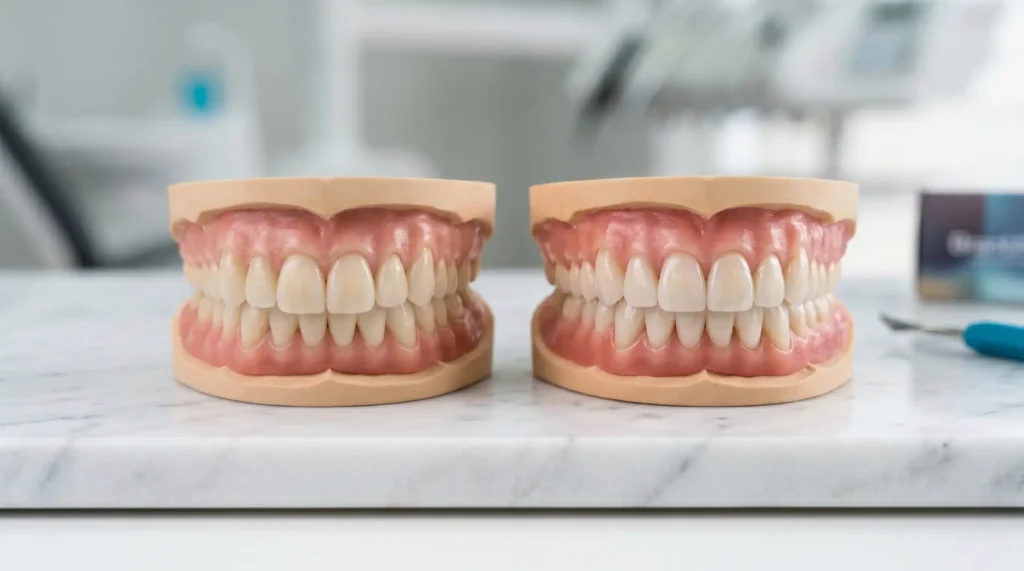
If you are evaluating resin veneers vs porcelain To improve your smile, the first real decision is not "whether to get them done," but with what material.
What are dental veneers (and what problems do they solve)
They are primarily used on the teeth visible when smiling and are one of the central tools of a planned smile design. As the American Dental Association in its patient information on veneers, The treatment should always begin with an evaluation by a licensed dentist, on healthy teeth free of caries.
Veneers are thin shells that are bonded to the front surface of the teeth to correct shape, color, size, or minor gaps and misalignments. They are primarily used on teeth visible when smiling and are a key tool in prosthodontics. smile design planned.
The difference between the two main options lies in the material:
- Resin (composite) veneers: They are constructed with composite resin, usually molded directly onto the tooth in one or two sessions.
- Porcelain (ceramic) veneers: They are manufactured in a laboratory from an impression or digital scan, and then cemented onto the tooth.
That difference in origin —shaped in the mouth vs. manufactured in the laboratory— explains almost all the other differences you will see below.
Resin vs porcelain veneers: a comparison by criteria
Aesthetics and naturalness
The porcelain It usually offers a more natural result in the long run. The material mimics the translucency of tooth enamel and reflects light similarly to a real tooth, helping to prevent the smile from looking "flat" or dull.
The resin It achieves very good aesthetic results, especially in moderate corrections, but it tends to lose shine and become stained over time due to contact with coffee, wine, cigarettes, or certain foods.
Durability
Here, porcelain has the advantage. It's more resistant to wear and stains, so with proper care, it maintains its appearance for longer. Resin is more susceptible to fractures at the edges and loss of polish, although it has a practical advantage: if damaged, it can usually be repaired directly without having to redo the entire veneer.
Cost
Resin is the most affordable option, largely because it requires fewer appointments and no laboratory work. Porcelain involves a larger investment due to the material, the manufacturing process, and the precision it demands. However, in the long run, the difference diminishes: the longer lifespan of porcelain can offset its initial cost compared to the potential repairs or replacements required for resin.
Tooth preservation
Resin veneers typically require minimal or even no enamel removal, making them more conservative and, in some cases, reversible. Porcelain veneers generally require slight tooth preparation for proper seating, a procedure that is irreversible. This is an important factor if you value preserving the natural tooth structure.
Treatment time
Resin restorations can be completed in one or two appointments, as they are sculpted directly in the office. Porcelain restorations require at least two phases—preparation and impression/scanning first, followed by placement—due to the laboratory work involved. For patients from other cities or countries, this time difference is a key factor to consider when planning their trip.
Comparative table
| Criterion | Resin veneers | Porcelain veneers |
|---|---|---|
| Long-term aesthetics | Good, it loses its shine over time | Very natural and stable |
| Stain resistance | Minor | High |
| Durability | Average | High |
| Initial cost | More accessible | Greater investment |
| Tooth wear | Minimal or zero | Light carving |
| Repair | Repairable in the doctor's office | It requires redoing the veneer |
| Number of appointments | 1–2 sessions | 2 phases (with laboratory) |
So, which veneer is best for you?
The choice depends on your priorities, not a fixed rule:
- Choose resin if You're looking for a more affordable option, an improvement in just a few sessions, or a more conservative alternative for your teeth, and you're willing to take care of the polishing and avoid excessive pigmentation.
- Choose porcelain if You prioritize the most natural and long-lasting aesthetic result, you want greater resistance to stains and wear, and you consider veneers a multi-year investment.
In practice, many cases are decided not solely on the material but on the diagnosis: the condition of your teeth, your bite, the desired color, and the number of teeth to be treated. Therefore, the responsible recommendation is not to choose blindly based on an article, but to confirm the best option through a clinical evaluation of your specific case. Results vary from patient to patient.
Conclusion
The comparison between resin veneers vs porcelain In short: resin is more affordable, quicker, and more conservative; porcelain is more aesthetically pleasing, resistant, and durable. Both are valid options within a well-planned smile design, and the right choice is the one that best suits your diagnosis, your expectations, and your budget.
Do you want to know which one best suits your smile? Schedule your consultation with Dr. Jorge Mario Barliza via WhatsApp and receive an evaluation of your case to determine the appropriate materials and plan. If you're still exploring, you can also read What is digital smile design? and how it allows you to visualize your result before you start.
Frequently Asked Questions
How long do resin and porcelain veneers last? With proper care, porcelain veneers typically maintain their appearance for longer than resin veneers, thanks to their greater resistance to wear and stains. The actual lifespan depends on each patient's hygiene, habits, and professional follow-up.
Do veneers damage teeth? Resin veneers typically require minimal or no enamel reduction. Porcelain veneers generally involve light tooth preparation to ensure a proper fit. In both cases, a preliminary evaluation determines how much of the natural tooth structure can be preserved.
Which side stains less? Porcelain is more resistant to stains. Resin can become stained over time from contact with coffee, wine, cigarettes, and other foods, so it requires care to maintain its color and shine.
Can veneers be repaired if they are damaged? Resin veneers can usually be repaired directly in the dentist's office. Porcelain veneers, being manufactured in a laboratory, typically require the affected tooth to be remade rather than repaired.
How many appointments do I need to get veneers? Resin veneers can be completed in one or two sessions. Porcelain veneers require at least two sessions due to the laboratory work. The exact number of sessions will be determined during your consultation based on your individual case.


 Spanish
  English